Friday, July 17, 2026
What Everyone Can Learn from WordCamp US 2026

Technology makes knowledge abundant. Community makes it meaningful.
Disclaimer: This post contains affiliate links. If you make a purchase through these links, a commission will be earned at no cost to you.
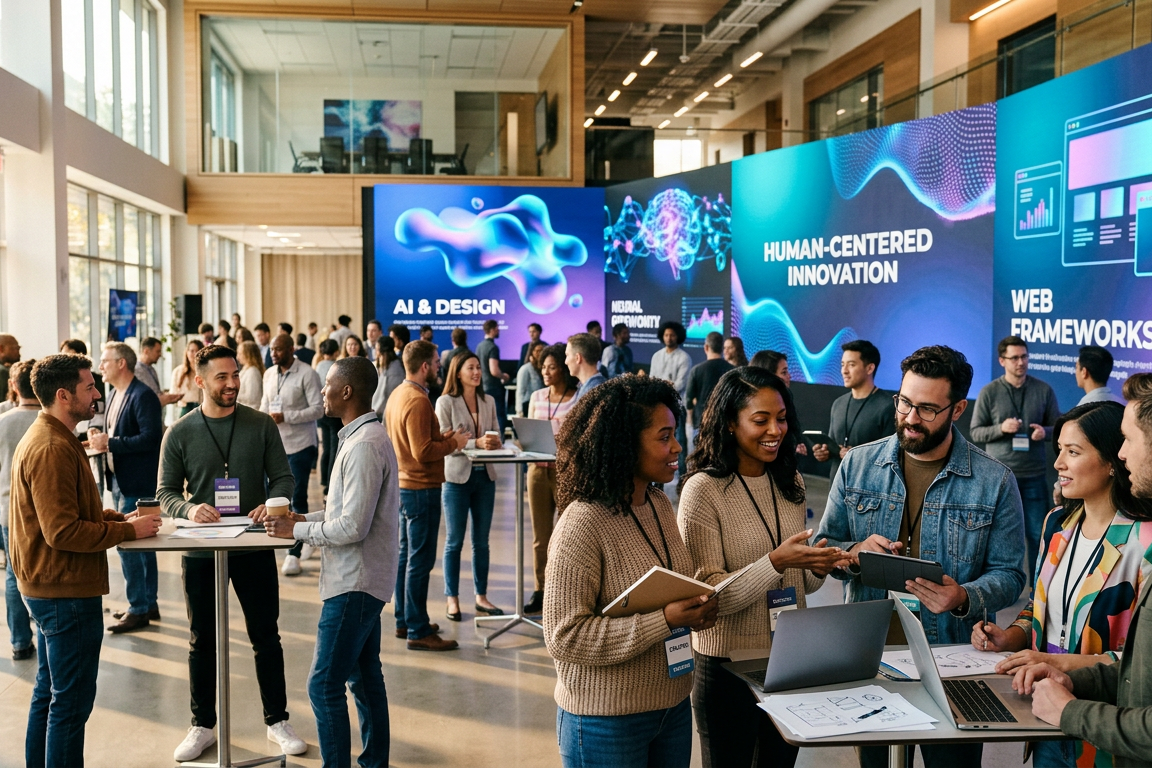
In just a few weeks, thousands of developers, designers, entrepreneurs, marketers, educators, and creators will gather in Portland, Oregon for WordCamp US 2026.
On the surface, it's a conference centered around WordPress, the software that powers a significant portion of the web.
But if history is any guide, the conversations happening there won't be limited to WordPress.
They'll be about something much bigger.
Artificial intelligence.
The future of publishing.
Open source.
Digital trust.
Accessibility.
Community.
And perhaps the most important question of all:
What does it mean to be a creator in an age where machines can create, too?
Whether you build websites, write software, run a business, or simply enjoy learning about technology, conferences like WordCamp often serve as a preview of where the broader digital world is heading. They bring together people who are experimenting with new ideas, solving real problems, and asking difficult questions before those questions become mainstream.
This year, AI will undoubtedly be part of that conversation.
But I suspect the most interesting takeaway won't be about AI itself.
It will be about people.
Looking Ahead
WordCamp US 2026 hasn't happened yet.
By the time attendees head home, there will be new ideas, fresh debates, unexpected announcements, and countless conversations that never make it into the keynote recordings.
I'm less interested in the headlines than in the underlying patterns.
What questions are people asking?
What problems are they trying to solve?
Where is technology helping us become more capable, and where does it risk getting in the way?
After the conference wraps up, I'll revisit these questions and share the ideas that stood out most, along with what they might mean for all of us trying to build meaningful work in an increasingly AI-powered world.
Because while the tools continue to evolve, the goal remains the same:
To create things that genuinely improve people's lives.
Absolutely. I would continue it in a way that keeps the focus on timeless principles rather than trying to predict specific announcements.
Every Great Tool Changes the Rules
Every generation encounters a technology that changes the way we create.
The printing press made books accessible to ordinary people. The camera transformed how we captured history. The internet gave anyone with an idea the ability to publish it to the world.
Artificial intelligence feels like the next chapter in that story.
For the first time, the barrier isn't just creating something. It's creating something that matters.
Need a blog post? AI can draft one in seconds.
Need an image? AI can generate one before your coffee cools.
Need code? AI can write a first pass faster than most developers can open their editor.
The speed is astonishing.
But speed has never been the same thing as significance.
When everyone has access to the same tools, the competitive advantage shifts away from the tool itself and toward the person using it.
The New Creative Advantage
As AI becomes more capable, it's tempting to assume technical skills will become less important.
I think the opposite is true.
The people who thrive won't necessarily be the ones who know the most prompts or use the newest models. They'll be the people who know how to think clearly.
They'll ask better questions.
They'll recognize weak ideas before spending hours polishing them.
They'll understand their audience well enough to create something genuinely useful.
And they'll know when to trust AI and when to trust their own judgment.
In many ways, AI is making human judgment more valuable, not less.
The easier it becomes to generate content, the more important it becomes to generate insight.
Authenticity Is Becoming Scarce
The internet has never had a shortage of information.
Now it may have an overabundance.
As more articles, videos, and images are generated with AI assistance, audiences are becoming surprisingly good at sensing when something feels generic.
They may not know exactly why.
But they know when something lacks a point of view.
They know when a story feels borrowed instead of lived.
They know when advice sounds technically correct but emotionally empty.
That's encouraging.
Because it means authenticity is becoming a competitive advantage.
Your experiences.
Your failures.
Your lessons.
Your perspective.
Those things can't be scraped from the internet or generated from a prompt.
They have to be earned.
Community Still Matters
One thing technology has never replaced is the value of gathering together.
That's one reason events like WordCamp continue to attract thousands of people every year.
Yes, attendees come to learn.
But they also come to ask questions they didn't know they had.
They meet collaborators.
They discover opportunities.
They hear stories that challenge assumptions.
Some of the most valuable conversations happen in hallways, over lunch, or while waiting in line for coffee.
AI can answer questions.
Community helps us ask better ones.
In a world where information is becoming almost unlimited, relationships may become even more valuable.
Build More Than You Consume
One of the easiest traps to fall into today is becoming a professional consumer.
Another newsletter.
Another podcast.
Another YouTube video.
Another AI tool.
Learning is valuable.
But learning without building eventually becomes entertainment.
The people who grow the fastest are usually the ones willing to experiment before they feel ready.
They publish imperfect ideas.
They create side projects.
They test assumptions.
They embrace feedback.
Progress rarely comes from waiting until you have all the answers.
It comes from putting something into the world and learning from what happens next.
Why This Matters Beyond WordPress
You don't need to use WordPress to benefit from the conversations happening at WordCamp.
The questions being explored there are the same questions facing nearly every profession.
How do we work alongside AI instead of competing against it?
How do we maintain trust in an increasingly automated world?
How do we create experiences that still feel deeply human?
Whether you're an entrepreneur, a teacher, a designer, a software engineer, or someone simply trying to stay relevant in a rapidly changing world, those questions affect you.
They're bigger than any single platform.
They're shaping the future of work itself.
Looking Ahead
WordCamp US 2026 is still a few weeks away.
By the time attendees head home, there will undoubtedly be exciting product announcements, new ideas, spirited debates, and plenty of technical insights.
I'm looking forward to following those conversations.
But I'm even more interested in the themes that emerge beneath them.
What challenges keep surfacing?
What opportunities excite people the most?
What concerns are shared across different industries?
Most importantly, what do those conversations teach us about living and creating well in an age of extraordinary technological change?
Those are the questions I'll be paying attention to.
Because technology has always been at its best when it helps people become more capable, more connected, and more creative.
That's a future worth building toward.
I like making this a standalone callout box near the end of the article, just before the conclusion.
Thinking About Attending WordCamp US 2026?
If this article sparked your curiosity, there's no better way to experience the WordPress community than by attending WordCamp US 2026 in person.
From August 16 to 19, 2026, developers, designers, content creators, marketers, business owners, and open source contributors will gather in Phoenix, Arizona for four days of learning, networking, workshops, and hands-on collaboration. The event includes Contributor Day, Showcase Day, two full conference days, and sessions covering AI, accessibility, performance, security, content strategy, ecommerce, and much more. WordCamp US, Phoenix AZ 2026
Whether you're an experienced WordPress professional or just beginning your journey, WordCamp is an incredible opportunity to learn from industry experts, meet fellow creators, and discover new ideas that can shape your next project.
Save on Your Registration
As a WordCamp US affiliate, I'm excited to share an exclusive discount with LifeAwesome readers.
👉 Register using my affiliate link below and enter coupon code AF26 at checkout to save $20 on a General Admission ticket. WordCamp US, Phoenix AZ 2026
🎟️ Register Here:
WordCamp US 2026 Tickets
Frequently asked questions
Continue Reading