Monday, December 15, 2025
The Artist In You Needs to See the Amazing Pictures on the Internet
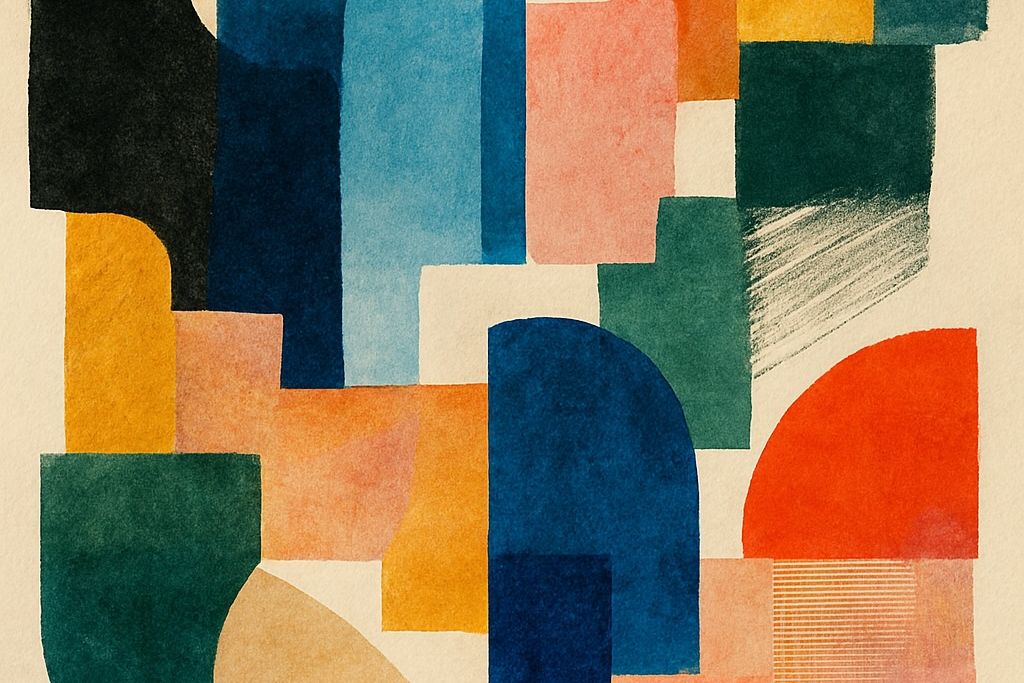
Very little is entirely new. But what is new is you, interpreting the world through your particular mix of experience and attention.
I’ve always been fascinated by people who can create photorealistic drawings with nothing more than a pencil.
That kind of work clearly requires practice and talent, but it also requires something harder to define: patience, observation, and a willingness to sit with something long enough for emotion to show up. When a drawing doesn’t just look real but feels real, it crosses into something else entirely.
It becomes magic.
Seeing work like that doesn’t make me feel inadequate. It makes me feel awake. It expands my sense of what’s possible.
I grew up during the era of clip-art on CD-ROMs.
Back then, visual inspiration felt finite. The early internet carried that same feeling — a small, shared library of images that circulated slowly. Then came Facebook. Then Instagram. And now, AI.
Suddenly, the visual world feels endless.
You can find — or create — an image of almost anything you can imagine. Styles collide. Mediums blur. Entire aesthetic movements emerge in months instead of decades.
For someone wired for visual thinking, that abundance is intoxicating. It can also be paralyzing.
My own creative medium has always been web design.
I’ve always wanted to be known for creative expression — not just functionality, not just technical skill, but work that felt intentional. Thoughtful. Alive. I wanted my work to communicate something, even when it was quiet.
And the most difficult person I’ve ever tried to impress with that work has been myself.
I’ve been my own harshest critic for as long as I can remember.
When you work in a creative field, it’s almost impossible to avoid comparison.
You see brilliant layouts. Elegant interactions. Subtle typography choices that feel effortless. Entire sites that seem to arrive fully formed, without friction. And somewhere along the way, exposure turns into pressure.
I used to believe that if I couldn’t create something completely original — something no one had ever seen before — then it wasn’t worth making.
That belief stopped me more times than I care to admit.
There’s a quiet danger in only ever looking at your own work.
When artists exist inside a visual echo chamber, ideas stagnate. New inputs stop arriving. Everything starts to feel either forced or derivative.
At the same time, too much comparison — without context — can freeze you in place. You start measuring yourself against standards that were never meant to be yours.
I don’t know that anything is truly novel anymore — and I don’t mean that cynically.
Most creativity seems to be the mixing, remixing, and reinterpreting of ideas that already exist. New combinations. New constraints. New perspectives layered on top of familiar patterns.
And maybe that’s not a flaw. Maybe that’s the mechanism.
For a long time, I chased originality like it was a finish line.
I hoped people would marvel at the novelty of my ideas — that they’d see something and think, I’ve never seen that before. Eventually, I had to be honest with myself: I was chasing an impossible standard.
Very little is entirely new.
But what is new is you — interpreting the world through your particular mix of experience, taste, and attention.
That’s not a compromise.
That’s the source.
Beyond talent, artists need a few simple things.
Time to explore what’s inside them.
Space to practice their medium.
Permission to start over as many times as it takes.
That’s why it’s called practice.
Exposure, when held gently, plays a crucial role here. Seeing great work doesn’t make you smaller. It calibrates your eye. It gives you language for what you feel but haven’t yet articulated.
It shows you what’s possible — without telling you who you’re supposed to be.
Of course, comparison can still go wrong.
Looking at others’ work can trigger the fear that what you’re making won’t measure up. But that fear often hides a deeper question: measure up to what, exactly?
Whose standard are you using?
I’ve learned that I am almost always my own harshest critic. I see every flaw, every shortcut, every unfinished thought. Others don’t. They see what resonates — or they don’t — and then they move on.
And that’s okay.
The amazing pictures on the internet aren’t there to intimidate artists.
They’re there to expand us. To remind us that imagination is vast, that expression is endless, and that no one creates in isolation.
We learn by seeing.
We grow by exposure.
And we find our voice by paying attention long enough for it to sound like us.
Sometimes the bravest creative act isn’t making something new.
It’s allowing yourself to try — even when the only person you’re still trying to impress is yourself.
Continue Reading