Wednesday, January 7, 2026
Why Your Digital Identity Needs a Digital Home in 2026

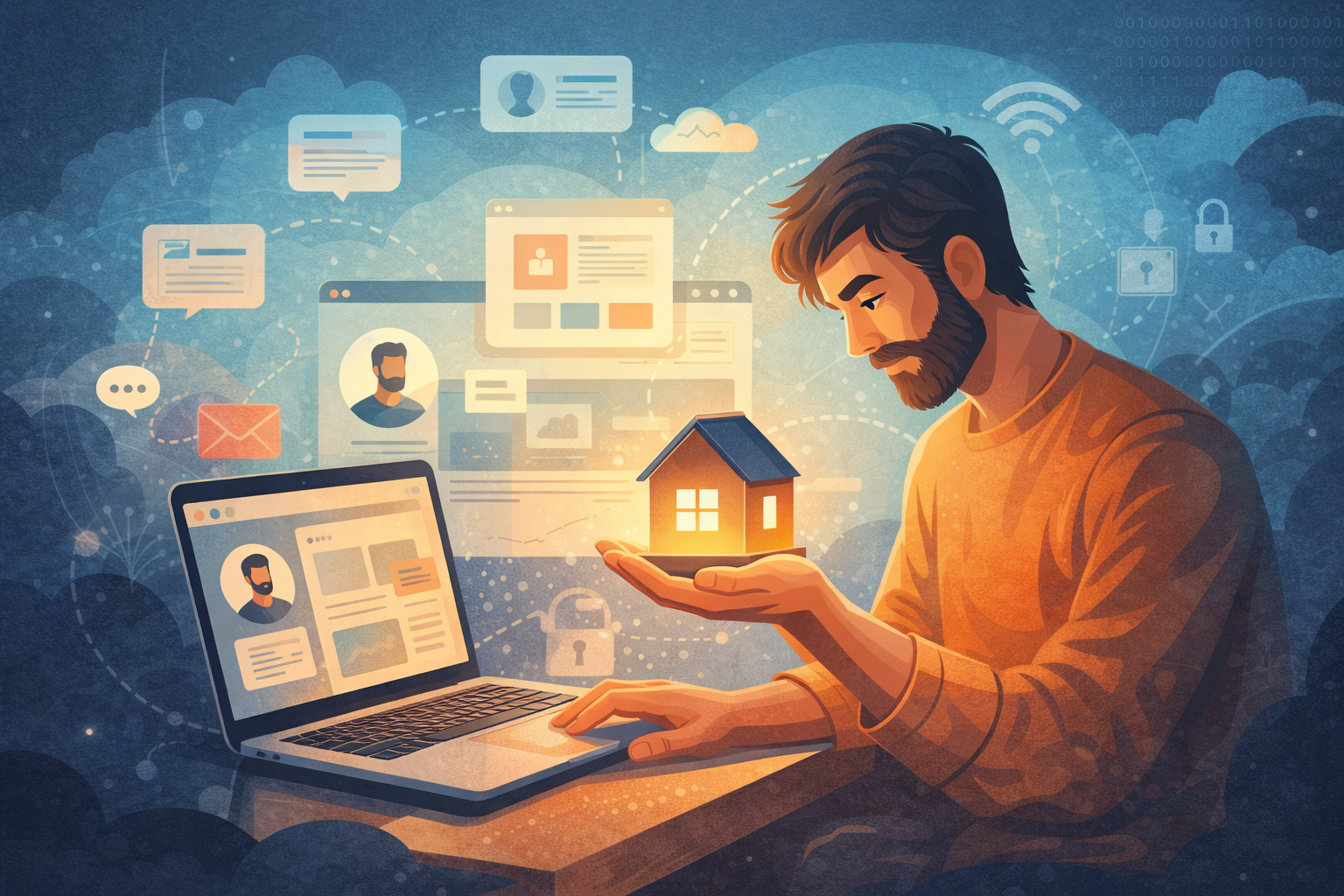
A digital identity without a home becomes fragmented.
There was a time when having a digital identity felt optional.
You could exist comfortably offline. Your work lived where you showed up. Your reputation spread slowly, through proximity and familiarity. The internet was an accessory, not an extension.
That time has passed.
In 2026, whether we like it or not, most of us already have a digital identity. The only real question is whether we’re building it intentionally — or letting it form accidentally.
And just as important: whether that identity actually has a home.
A Digital Identity Exists Whether You Build It or Not
Every interaction leaves a trace.
A comment.
A profile.
A post you shared years ago and forgot about.
An outdated bio.
A half-finished thought living on someone else’s platform.
Taken together, these fragments tell a story. And when you don’t shape that story yourself, others do it for you — algorithms, search results, timelines, and context you don’t control.
Building a digital identity isn’t about self-promotion.
It’s about authorship.
It’s about deciding what you stand for, what you’re working on, and how you want to be understood when someone encounters you outside of the room you’re standing in.
Identity Without a Home Is Fragmented
Here’s the part that often gets overlooked:
A digital identity without a digital home becomes scattered.
When your ideas live only in posts, profiles, or platforms you don’t own, your identity is constantly being reshaped by forces outside your control. What’s visible changes. What’s emphasized shifts. What lasts is unpredictable.
Social platforms are useful — but they’re not foundations. They’re rooms you visit, not places you live.
A digital home is different.
It’s a place where your ideas can accumulate instead of disappearing. Where context survives longer than a feed refresh. Where your work can be encountered in full, not in fragments.
Identity Is a System, Not a Performance
One of the biggest misunderstandings about digital identity is the idea that it’s performative.
That it requires constant posting, clever branding, or a carefully curated persona.
In reality, a strong digital identity behaves more like a system.
It’s consistent.
It’s coherent.
It reflects your values even when you’re not actively maintaining it.
A digital home supports this kind of system. It gives your identity a center of gravity. Instead of constantly explaining who you are, your work begins to speak for itself.
This is where trust comes from — not volume, not visibility, but continuity.
Ownership Changes How You Show Up
There’s a meaningful difference between appearing online and owning your presence.
When everything about you lives on rented platforms, your identity is always provisional. It can be reshaped, de-prioritized, or erased without warning. You’re always adapting to someone else’s rules.
Ownership changes that.
A digital home — whether it’s a personal site, a long-form body of writing, or a place where your thinking lives over time — creates stability. It allows your identity to mature instead of constantly resetting.
You begin to see patterns in your thinking.
Your interests evolve, but they don’t vanish.
Old ideas resurface with more clarity and depth.
This continuity is grounding.
It reminds you that growth isn’t reinvention every year. It’s refinement. Alignment. Small course corrections instead of dramatic pivots.
In a culture that rewards novelty, continuity becomes a quiet differentiator.
Why This Matters at the Start of a Year
January invites reflection, but it also invites honesty.
Who am I becoming?
What am I building?
What deserves more intention this year?
A digital identity needs somewhere for those questions to land.
A digital home turns reflection into structure.
It turns intention into visibility.
It gives your future self something to build on instead of starting from zero again.
That’s why this work fits the beginning of a year so well. It’s not about setting goals — it’s about creating conditions.
You Don’t Need to Be Everywhere
One of the most freeing realizations is this:
You don’t need to be everywhere to be clear.
A thoughtful digital identity often reduces noise rather than adding to it. A digital home allows you to choose fewer channels, speak more deliberately, and let meaning accumulate over time.
It’s not about frequency.
It’s about signal.
Building Quietly Is Still Building
Not every digital identity needs to be public-facing or commercial.
Some exist to support thinking.
Some to document work.
Some to share selectively.
What matters is that it’s intentional — and that it has a place to live.
The strongest digital identities don’t shout.
They resonate.
A Thought for 2026
If 2026 is a year you want more alignment, less noise, and fewer restarts, consider this:
Build something you own.
Give your ideas a home.
Let your digital identity become an asset instead of an afterthought.
You don’t need to predict the future to do this well.
You just need a place where your work can live long enough for the story to make sense — including to you.
Closing Note
Your digital identity doesn’t have to be impressive.
It just has to be yours — and it needs somewhere to live.