Monday, March 9, 2026
What I Actually Like About WordPress (After Building a Site This Week)

WordPress may not be the flashiest builder, but its structure, publishing tools, and built-in ecosystem make it an incredibly practical platform for building content-driven websites.
Disclaimer: This post contains affiliate links. If you make a purchase through these links, a commission will be earned at no cost to you.
What I Actually Like About WordPress (After Building a Site This Week)
When I started this experiment, my goal was simple:
to build a small, automated marketing system using WordPress and free tools.
Along the way I tested the WordPress AI site builder, experimented with templates, added pages, and wired up some basic automation.
And I’ll be honest — some parts of the experience were clunky.
But that’s not the whole story.
After spending time inside the platform, there are several things WordPress does extremely well. These are the parts that actually made the project easier than I expected.
Let’s walk through them.
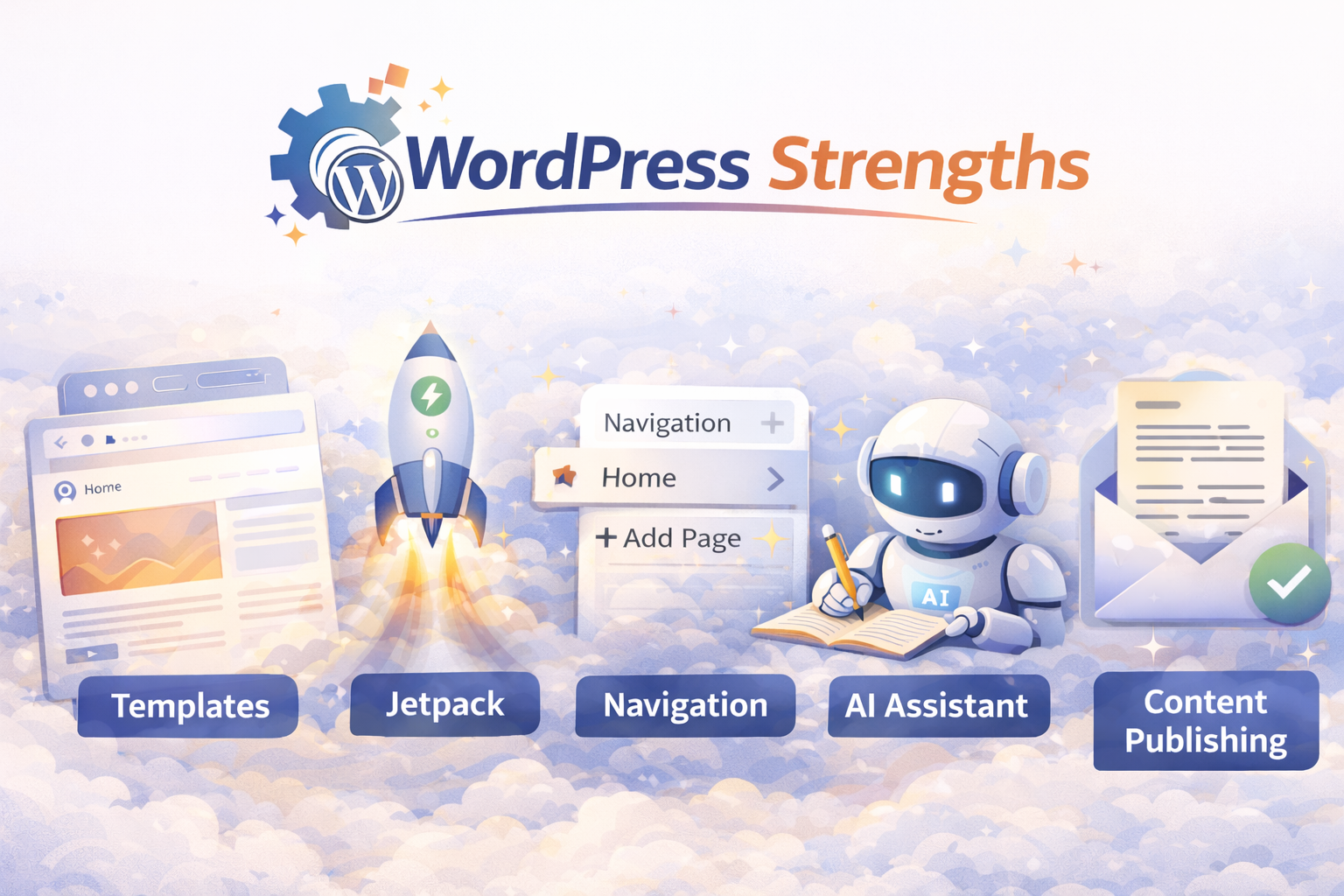
1. The Template System Is Surprisingly Solid
One of the things WordPress gets very right is its template system.
Instead of designing every page from scratch, you can work within predefined layouts that are already structured correctly.
That means:
• headers stay consistent
• navigation remains intact
• layouts don’t accidentally break
• sections remain editable
I found it especially helpful that you can modify specific sections without worrying about destroying the whole page layout.
For someone building quickly, this matters.
You don’t want to fight the structure of your site — you want the structure to guide you.
WordPress templates do a good job of providing that guardrail.
A small word of caution, though. Not every template available is supported by the AI editor. At the time of writing, only a few basic templates are supported. This simply means that if you select a different template that is not supported, you can't ask AI to make design changes for you. You are limited to navigating and clicking on your own. Not a deal breaker, but the object of my test was to do things in a fully-automated fashion.
2. Jetpack Being Built-In Is Actually Really Nice
Another thing I appreciated is that Jetpack comes integrated with WordPress.com.
Jetpack bundles together a bunch of features that normally require separate plugins, like:
• site statistics
• performance tools
• security features
• backups
• social sharing
Having those tools available out of the box simplifies the setup process a lot.
Instead of spending time researching and installing five different plugins, you already have a strong baseline toolkit available.
For a quick build like this, that’s a big win.
3. Creating Pages and Navigation Is Dead Simple
Some website builders hide navigation settings or make them harder than they need to be.
WordPress keeps it straightforward.
Adding a page takes seconds.
Adding that page to your site navigation is just as easy.
You can quickly organize your site structure with:
• top navigation
• footer navigation
• nested menu items
For a content-driven site or marketing funnel, that simplicity is exactly what you want.
You shouldn’t have to think too hard about your menu system.
4. The AI Assistant Is Useful for Simple Tasks
WordPress now has an AI assistant built right into the editor.
It’s not as powerful as working directly with tools like ChatGPT or Claude.
But it still has its place.
For example, it works well for:
• rewriting a paragraph
• generating short descriptions
• adjusting tone
• expanding brief content
Think of it less like a full creative partner and more like a quick writing helper inside the editor.
For simple requests, it does the job.
5. WordPress Still Shines as a Content Platform
This might be the most important point.
WordPress is fundamentally designed for publishing content.
And it shows.
Creating posts, organizing categories, building pages, and structuring a site around articles is still where WordPress feels most natural.
That’s exactly why it continues to power such a large percentage of the web.
When your strategy revolves around content — blog posts, tutorials, guides, or newsletters — WordPress still provides a very solid foundation.
The Bottom Line
No platform is perfect.
Some parts of the experience are still evolving, especially when it comes to AI-driven site building.
But the core strengths of WordPress are still very clear:
• a flexible template system
• built-in tools like Jetpack
• simple page and navigation management
• helpful AI writing assistance
• a strong content publishing foundation
For building my lightweight marketing engine for content publishing, those strengths go a long way.
My hot take: don't let technology hold you back.. Wordpress.com includes everything you need to get started. With only a few clicks, you'll be up and running with a proven content system that is simple and effective.